Key Facts
- Legends of humans transforming into wolves span centuries and continents. We explore the real medical conditions and historical events behind the werewolf myth.
- Editorial verdict: Fake
- Estimated reading time: 2 minutes (429 words)
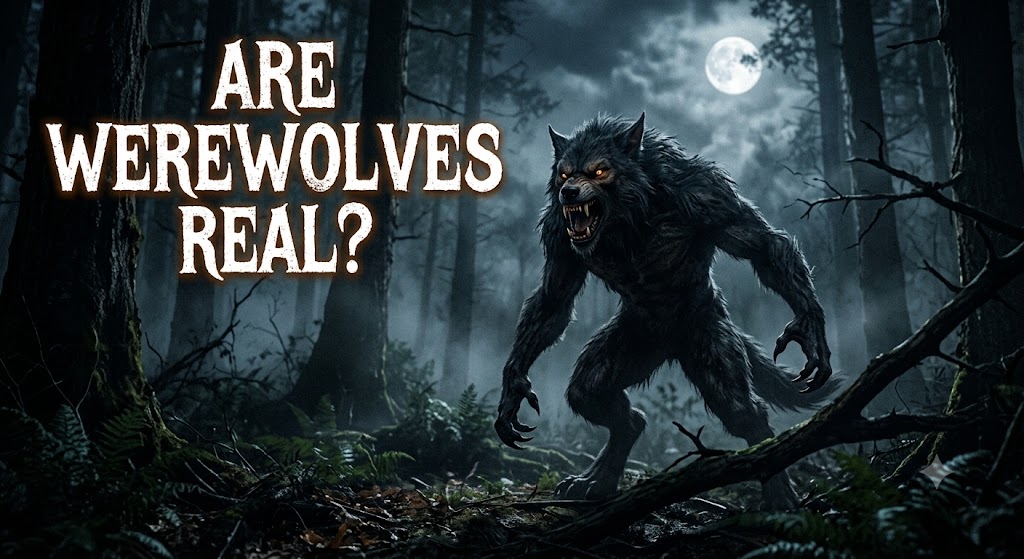
The werewolf — a human who transforms into a wolf or wolf-like beast, typically during a full moon — is one of the oldest and most widespread monsters in folklore. From ancient Greek mythology to medieval European witch trials, werewolf legends have haunted humanity for thousands of years. But is there any reality behind the myth?
The History
Werewolf legends are ancient and global:
- Ancient Greece: The myth of King Lycaon, who was transformed into a wolf by Zeus as punishment, gives us the word "lycanthropy"
- Norse mythology: Berserkers were warriors who wore wolf skins and fought in a frenzied, animal-like state
- Medieval Europe: Between 1520 and 1630, there were an estimated 30,000 werewolf trials in France alone. People were tried, tortured, and executed for allegedly transforming into wolves and attacking villagers
- Peter Stumpp (1589): One of the most famous cases — a German farmer executed for allegedly being a werewolf serial killer. Modern historians believe his "confession" was extracted through extreme torture during a period of political witch-hunting
Real Conditions Behind the Myth
Several real medical and psychological conditions likely contributed to werewolf beliefs:
- Hypertrichosis: An extremely rare genetic condition causing excessive hair growth all over the body. Historically, people with this condition were displayed in sideshows and called "wolf men"
- Clinical lycanthropy: A genuine psychiatric condition in which a person believes they are transforming into an animal. It's associated with schizophrenia, bipolar disorder, and severe depression
- Rabies: Transmitted by animal bites, rabies causes aggression, hypersensitivity, hydrophobia, and a tendency to bite — symptoms that could easily be interpreted as "becoming a beast" in pre-modern times
- Porphyria: Some forms cause sensitivity to sunlight, excessive hair growth, and reddish-brown teeth — a combination that maps neatly onto werewolf (and vampire) legends
- Ergotism: Consuming grain infected with ergot fungus causes hallucinations, convulsions, and psychosis — and may have triggered some of the mass werewolf panics of medieval Europe
Think you know something that's real or fake?
The community is waiting. Submit your question and let thousands of people vote on it.
Submit Your QuestionThe Full Moon Connection
The association between werewolves and full moons is surprisingly modern — it was popularized by the 1941 film The Wolf Man and was not a consistent feature of older folklore. Multiple studies have found no correlation between full moons and violent behavior, hospital admissions, or psychiatric episodes.
Our Verdict
Werewolves — humans who physically transform into wolves — are not real. However, the legend is rooted in genuine medical conditions (hypertrichosis, rabies, clinical lycanthropy, porphyria), historical events (medieval werewolf trials), and the universal human fear of the predator within. The myth endures because it speaks to something deeply primal — but literal shapeshifting has no basis in biology.
What do you think?
Cast your vote and see what the community thinks
0 total votes
No account needed — vote anonymously
Got something to investigate?
Submit your own "Is X real or fake?" question and let the community vote.
Discussion
No comments yet
Be the first to share your thoughts.