Key Facts
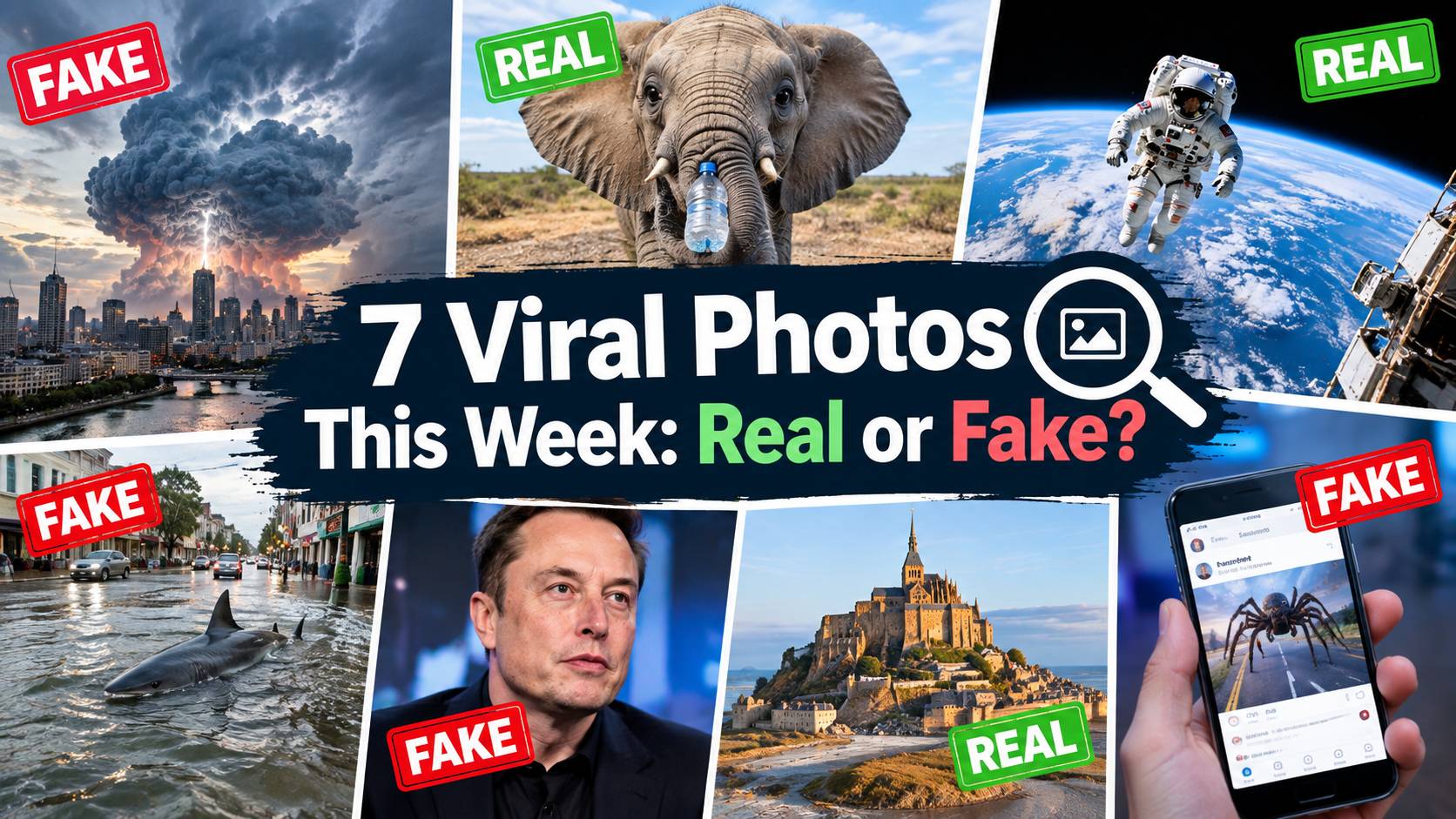
- Five AI-generated images and videos fooled thousands of people this week before being debunked. Here is what they got wrong, how they were detected, and what you can learn from each case.
- Editorial verdict: Fake
- Estimated reading time: 6 minutes (1334 words)
The Claim
In the never-ending stream of content that flows through social media, AI-generated fakes are becoming harder to distinguish from reality. This week was no exception, with several AI-generated images and videos achieving massive viral reach before being identified as synthetic. This compilation examines five of the most impactful AI fakes of the week, analyzing how each one was created, why it was convincing, and how it was ultimately detected.
Unlike our broader weekly roundup, this article focuses specifically on cases where AI-generated content successfully deceived a large audience, examining the techniques and conditions that made this deception possible.
The Evidence
Fake #1: The Emergency Landing That Never Happened
An AI-generated video showing a commercial aircraft making a dramatic emergency landing on a highway went viral, accumulating millions of views across platforms. The video was convincing enough that several local news stations initially reported on it before verification efforts revealed it was synthetic.
Why it fooled people: The video used a realistic aircraft model, plausible road scenery, and added camera shake and compression artifacts that simulated amateur phone footage. The emotional intensity of the scenario, a plane in danger, activated viewers' stress responses and reduced critical evaluation.
How it was detected: Aviation experts noticed that the aircraft's approach angle and speed were physically impossible for a safe landing. The runway markings on the highway were inconsistent with any real road system. And the aircraft registration number visible in one frame did not correspond to any registered aircraft. Frame-by-frame analysis revealed subtle physics inconsistencies in how the landing gear interacted with the road surface.
Lesson: Emergency and disaster content receives less scrutiny because of its emotional urgency. Take extra time to verify content that triggers your fight-or-flight response.
Fake #2: The Celebrity Restaurant Meltdown
An AI-generated image series purported to show a major celebrity having a public argument at a upscale restaurant. The images showed the celebrity in various stages of apparent anger, with other diners looking on in shock. Entertainment media picked up the story before the images were debunked.
Why it fooled people: The images were generated with a model that had been fine-tuned on this specific celebrity's appearance, producing a highly accurate likeness. The restaurant setting was generic enough to be plausible, and the narrative of celebrity misbehavior aligned with existing public perceptions.
How it was detected: The celebrity's publicist issued a swift denial with timestamped location evidence. Image analysis revealed that while the celebrity's face was convincingly rendered, the hands in several images showed AI artifacts. Most tellingly, the other diners' faces showed the characteristic smoothness and uniformity of AI-generated background figures.
Lesson: Before believing celebrity scandal content, wait for official responses and check whether entertainment journalists with established credibility are reporting the same story.
Fake #3: The Climate Change Satellite Photo
An AI-generated satellite image purporting to show dramatic glacial retreat was shared extensively in climate change discussions. The image showed a before-and-after comparison that exaggerated the actual rate of ice loss, with the "after" image being AI-generated while the "before" image was a genuine satellite photograph.
Why it fooled people: Climate change is real, and glacial retreat is well-documented. The fake image exploited genuine scientific concerns by exaggerating documented trends, making it plausible to viewers already informed about climate change. The use of a genuine "before" image made the comparison seem legitimate.
How it was detected: Glaciologists noticed that the ice retreat patterns shown in the "after" image did not match the physical geography of the glacier's bedrock, which constrains how ice can actually retreat. Satellite data from the claimed date showed significantly different ice coverage than depicted. The image metadata showed no satellite camera information.
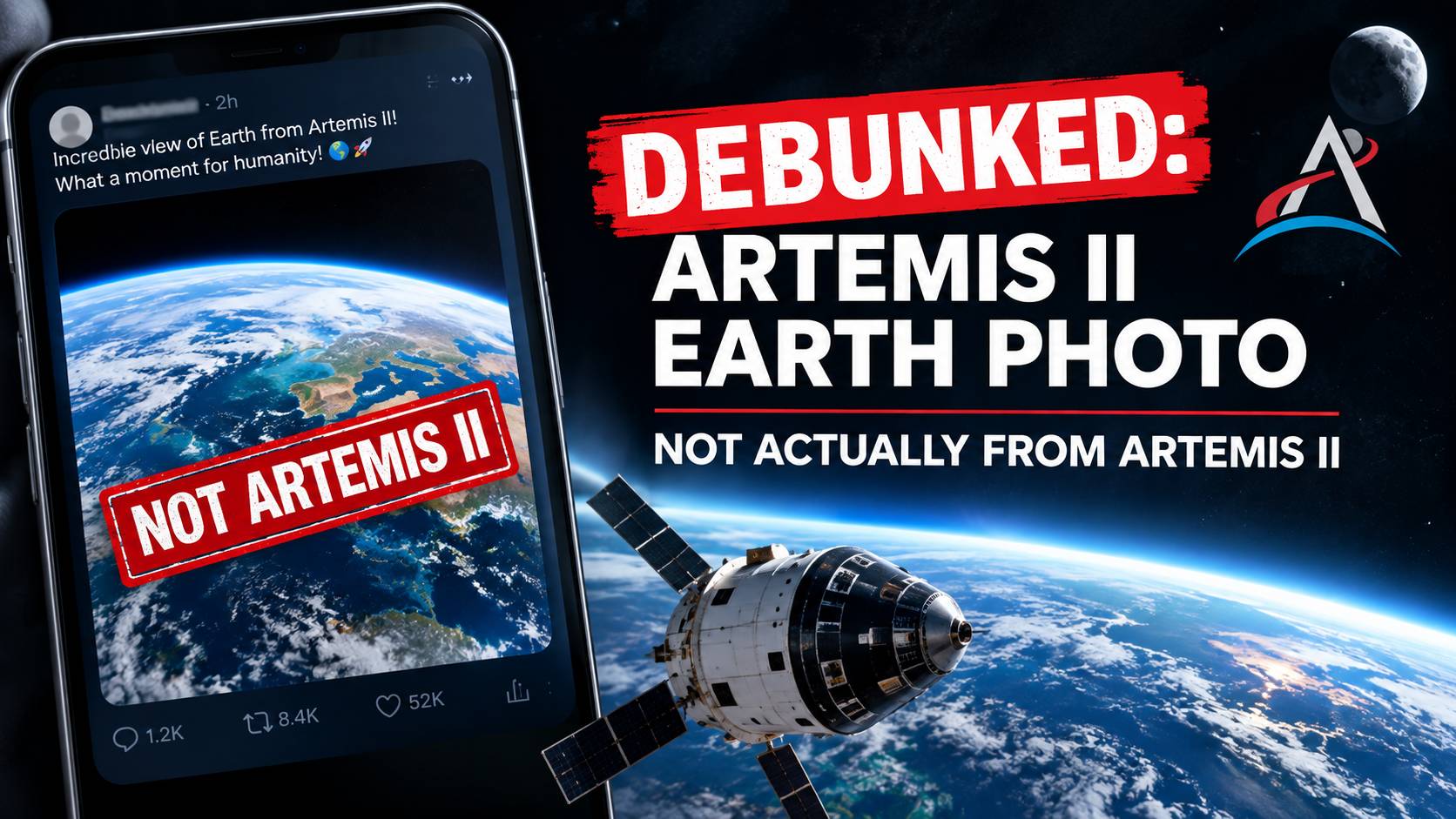
Lesson: Even content that supports a cause you believe in can be fabricated. Verify scientific imagery through official data sources regardless of whether the conclusion aligns with established science. Related coverage: misattributed space photos.
Fake #4: The Protest Violence Footage
An AI-generated video clip appearing to show police officers using excessive force against peaceful protesters was shared in the context of ongoing civil rights discussions. The video was deliberately designed to inflame tensions and was shared widely before being identified as synthetic.
Why it fooled people: The video exploited genuine concerns about police conduct and tapped into documented patterns of real events. It was produced at low resolution and with significant compression, simulating amateur phone footage while also masking the telltale signs of AI generation. The emotional gravity of the depicted scenario made viewers reluctant to question its authenticity for fear of dismissing genuine injustice.
How it was detected: The uniforms shown in the video did not match any real police department's current uniform specifications. The location shown could not be identified by local residents familiar with the area where the protest allegedly took place. Temporal analysis of the video revealed the characteristic smoothness of AI-generated motion, lacking the natural jitter and irregularity of real handheld phone footage.
Lesson: Content designed to trigger moral outrage deserves especially careful verification. Real injustices are documented through verifiable sources and official records. AI-generated protest footage is a growing threat to constructive civic discourse.
Fake #5: The Medical Breakthrough Announcement
An AI-generated image and accompanying text claimed to show results from a revolutionary medical treatment, depicting before-and-after images of a patient who allegedly experienced dramatic improvement from an experimental therapy. The content was shared in health-focused communities and generated significant engagement from people seeking hope for similar medical conditions.
Why it fooled people: The images appeared clinical and professional, mimicking the visual style of legitimate medical documentation. The accompanying text used medical terminology correctly and referenced real institutions, lending false credibility. People searching for medical solutions are particularly vulnerable to this type of content because of the emotional stakes involved.
How it was detected: The medical institution referenced denied conducting the claimed study. The before-and-after images, when analyzed, showed subtle inconsistencies in background elements that should have remained constant between photographs. The patient depicted could not be identified, and no informed consent documentation could be located. Medical professionals noted that the claimed improvement timeline was not consistent with known biological processes.
Lesson: Medical claims require the highest level of verification. Always check whether claimed research is published in peer-reviewed journals and whether the institutions cited confirm the research. False medical content can lead to real harm when people delay or abandon proven treatments. See our coverage of why AI detection is not enough for broader context.
Think you know something that's real or fake?
The community is waiting. Submit your question and let thousands of people vote on it.
Submit Your QuestionOur Verdict
FAKE. All five cases in this compilation were confirmed as AI-generated content that successfully deceived thousands of viewers before being debunked. The common factors across all five include emotional intensity, plausibility within existing narratives, and technical quality sufficient to pass casual inspection.
The diversity of subjects, from aviation emergencies to medical breakthroughs, demonstrates that AI-generated disinformation is not limited to any single domain. Every area of public discourse is now vulnerable to synthetic media manipulation.
How to Spot This Type of Fake
Drawing from all five cases, here are the key takeaways for protecting yourself from AI-generated disinformation:
- Emotional intensity is a red flag: Content that triggers strong emotional reactions, whether fear, outrage, hope, or amazement, deserves extra scrutiny. Disinformation creators deliberately engineer emotional responses because they reduce critical thinking and increase sharing behavior.
- Plausibility is not proof: AI-generated content often succeeds by depicting scenarios that are plausible within existing narratives. Just because something could happen does not mean the specific image or video depicting it is genuine.
- Verify through official channels: Real events leave traces across multiple independent systems. Official records, news reports, institutional confirmations, and eyewitness accounts all provide independent verification paths.
- Wait before sharing: The single most effective anti-disinformation strategy is waiting 24-48 hours before sharing dramatic content. Most AI-generated disinformation is debunked within this timeframe.
- Follow fact-checkers: Organizations dedicated to fact-checking have the expertise and tools to verify content more reliably than individual users. Following their work, including sites like ours here at RealOrFake, helps you stay informed about current disinformation trends.
Related Videos
Scroll to browse videos
What do you think?
Cast your vote and see what the community thinks
0 total votes
No account needed — vote anonymously
Got something to investigate?
Submit your own "Is X real or fake?" question and let the community vote.
Discussion
No comments yet
Be the first to share your thoughts.