Key Facts
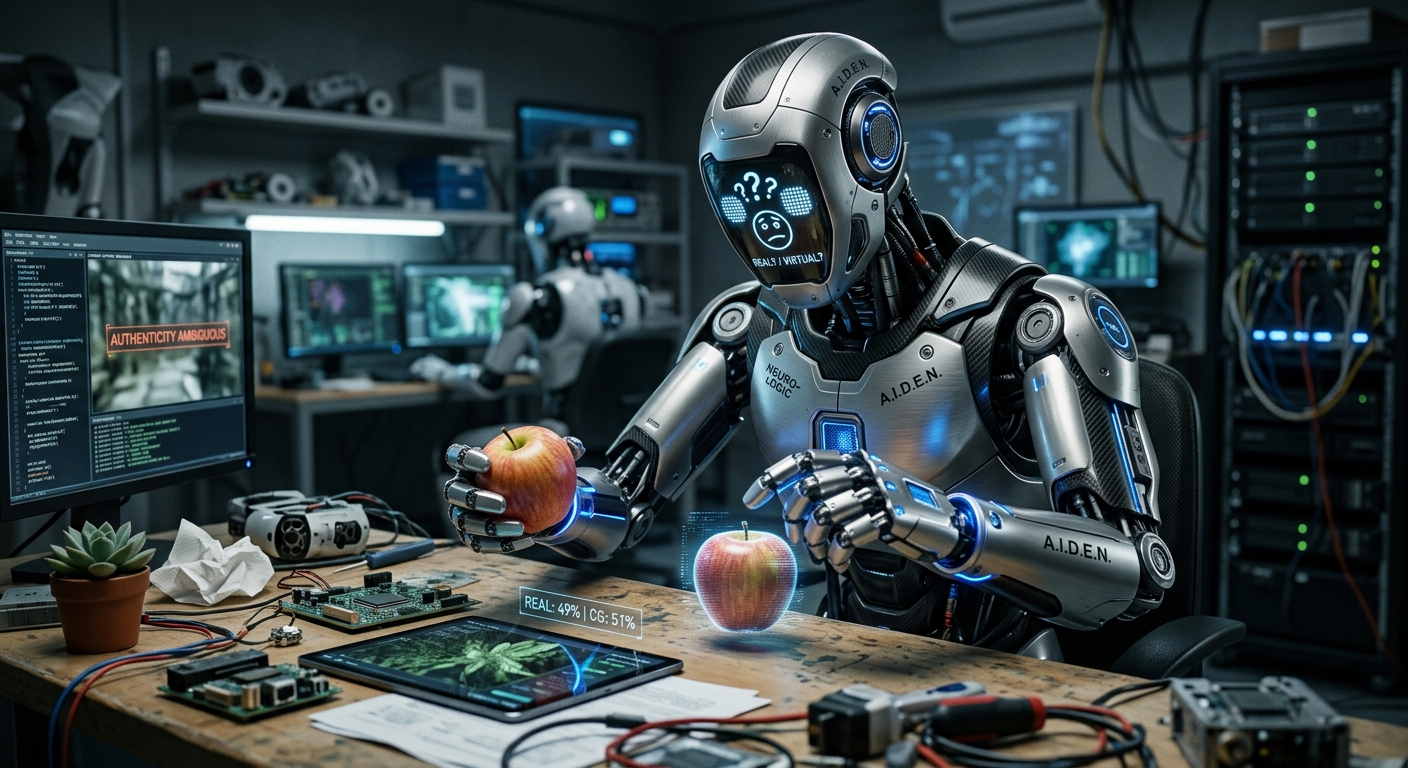
- As deepfake technology advances faster than detection methods, we examine why even the most sophisticated AI systems struggle to distinguish real from fake — and what this means for the future of truth online.
- Editorial verdict: Real
- Estimated reading time: 5 minutes (1062 words)
The Claim
The implicit claim underpinning much of the public discourse about AI and disinformation is that technology will save us from technology: that as AI-generated fakes become more sophisticated, AI-powered detection tools will keep pace, maintaining our ability to distinguish real from fake. But is this assumption justified?
Based on our extensive testing documented in our AI chatbot investigation and the specific failures of ChatGPT and Gemini, combined with our broader experience analyzing hundreds of AI-generated images and videos throughout our fact-checking work, we examine the fundamental challenge of AI-based detection and whether the technology arms race is one that detection can win.
The Evidence
The Arms Race Dynamic:
The relationship between AI generation and AI detection is fundamentally asymmetric, and this asymmetry favors the generators:
- Generators have the initiative: Creators of AI-generated content can test their output against detection tools before releasing it, iterating until their content passes detection. Detectors, by contrast, must respond to new generation techniques after they appear in the wild.
- Generation is easier than detection: Creating a convincing fake image requires generating content that looks plausible to human viewers. Detecting that same image requires identifying subtle statistical anomalies that distinguish it from genuine photographs. As generation technology improves, these anomalies become smaller and harder to detect.
- Training data favors generators: Detection tools must be trained on examples of AI-generated content, but new generation models produce content with different characteristics than previous models. This means detection tools are always training on yesterday's fakes while confronting tomorrow's.
Current Detection Limitations:
Even the best current detection tools have significant limitations that are often not well understood by the public:
- Model specificity: Detection tools trained on content from one generation model often perform poorly on content from a different model. A detector optimized for Midjourney images may miss Stable Diffusion images and vice versa.
- Post-processing vulnerability: Simple post-processing steps like resizing, compression, cropping, or adding filters can significantly reduce the effectiveness of detection tools. Screenshots of AI-generated images are often harder to detect than the original files because the screenshotting process alters the image's statistical properties.
- Adversarial attacks: Sophisticated actors can use adversarial techniques specifically designed to fool detection tools. These techniques add invisible perturbations to AI-generated images that cause detection algorithms to classify them as genuine.
- False positive problem: Many detection tools have significant false positive rates, incorrectly flagging genuine photographs as AI-generated. This undermines trust in the tools and can be weaponized to discredit legitimate media.
The Fundamental Challenge:
At a theoretical level, the challenge of AI detection faces a fundamental limitation related to the concept of the "perfect generator" in generative adversarial networks (GANs). In theory, a sufficiently advanced generator would produce content that is statistically indistinguishable from real content. While we have not reached this theoretical limit yet, each generation of AI models moves closer to it, making detection progressively harder.
This is not just a theoretical concern. We have observed a clear trend in our fact-checking work: images generated by newer models are consistently harder to detect than those generated by older models. The artifacts that were reliable indicators of AI generation a year ago, such as malformed hands, garbled text, and obvious lighting inconsistencies, are becoming less common in output from the latest models.
Real-World Implications:
The practical implications of these limitations are significant and growing:
- Political disinformation: As we documented in our investigations of deepfakes targeting German, Indian, and British politicians, AI-generated political content is becoming harder to debunk before it achieves its disinformation objectives.
- Erosion of trust: The existence of sophisticated deepfakes erodes trust in all media, including genuine content. This "liar's dividend" allows bad actors to dismiss real evidence as potential deepfakes.
- Speed vs. accuracy: In the time it takes to carefully analyze and debunk an AI-generated image or video, the content may have already reached millions of viewers. The asymmetry between the speed of sharing and the speed of verification continues to favor disinformation.
What Detection Can and Cannot Do:
Despite these limitations, AI detection tools are not useless. They remain valuable as part of a broader verification toolkit:
- They can identify lower-quality AI-generated content, which still constitutes the majority of AI fakes in circulation.
- They provide probabilistic assessments that, when combined with other verification methods, contribute to overall accuracy.
- They are improving over time, even if they are not keeping pace with generation technology.
- They raise the bar for creating convincing fakes, forcing disinformation actors to invest more time and resources.
Think you know something that's real or fake?
The community is waiting. Submit your question and let thousands of people vote on it.
Submit Your QuestionOur Verdict
REAL — it is genuinely true that current AI systems, including both general-purpose chatbots and specialized detection tools, cannot reliably distinguish AI-generated content from genuine content in all cases. The fundamental asymmetry of the generation-detection arms race means that purely technological solutions to the deepfake challenge are insufficient.
This does not mean we should abandon detection tools, but it does mean we need to supplement them with other approaches: media literacy education, content provenance standards, institutional verification processes, and critical thinking skills that do not depend on technology alone.
How to Spot This Type of Fake
Given the limitations of automated detection, human-centric verification methods become more important than ever:
- Develop media literacy: Learn to evaluate information sources, consider motivations behind content, and recognize manipulation techniques. These skills are more durable than any specific detection tool.
- Use provenance-based verification: Check where content comes from rather than just what it looks like. Content from established media organizations with editorial standards is more trustworthy than anonymous social media posts, regardless of how convincing the content appears.
- Practice the "pause before sharing" principle: The most effective anti-disinformation tool is simply waiting before sharing content that provokes strong emotional reactions. Much disinformation is debunked within 24-48 hours of appearing.
- Support content authentication standards: Initiatives like the Content Authenticity Initiative and C2PA (Coalition for Content Provenance and Authenticity) are developing standards for embedding verifiable provenance information in digital content. Supporting these initiatives helps build a more trustworthy information ecosystem.
- Combine multiple verification methods: Use detection tools, reverse image search, source verification, contextual analysis, and expert consultation together rather than relying on any single method.
The fight against AI-generated disinformation is not one that technology alone can win. It requires a combination of technological tools, institutional reforms, and individual critical thinking skills. For our weekly compilation of the latest fakes and how they were detected, follow our weekly roundup series.
Related Videos
Scroll to browse videos
What do you think?
Cast your vote and see what the community thinks
0 total votes
No account needed — vote anonymously
Got something to investigate?
Submit your own "Is X real or fake?" question and let the community vote.
Discussion
No comments yet
Be the first to share your thoughts.