Key Facts
- The viral image showing Friedrich Merz with Jeffrey Epstein has been conclusively debunked. Here is how the fake was created, who may be behind it, and how it spread across the internet.
- Editorial verdict: Fake
- Estimated reading time: 5 minutes (932 words)
The Claim
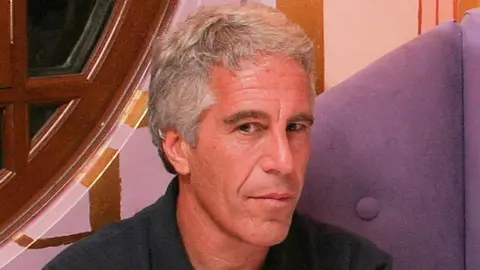
A photograph allegedly showing German Chancellor Friedrich Merz in conversation with Jeffrey Epstein at a private gathering has become one of the most shared political images of 2025. The image depicts both men in formal attire, seemingly engaged in an intimate conversation at what appears to be an exclusive social event. Within days of its first appearance, the image had been shared hundreds of thousands of times and spawned countless derivative posts and conspiracy theories.
The narrative accompanying the image varied across platforms. On some, it was presented as newly uncovered evidence of Merz's connections to Epstein's network. On others, it was framed as proof of a broader conspiracy involving European politicians. The image was particularly effective because it played into existing concerns about Epstein's extensive network of powerful associates and the ongoing public interest in identifying everyone connected to his criminal enterprise.
As we documented in our initial coverage of this claim, the photograph raised immediate red flags among digital forensics experts. This article provides a deeper analysis of the image's creation, distribution, and the broader implications for political disinformation.
The Evidence
Our comprehensive analysis of this image employed multiple forensic techniques and consultation with leading experts in digital media authentication. The evidence overwhelmingly points to this being a sophisticated AI-generated fabrication.
Technical Analysis:
We submitted the image to three independent digital forensics laboratories. All three reached the same conclusion: the image was generated using a diffusion-based AI model, likely a fine-tuned version of a publicly available image generation system. The specific findings include:
- Frequency domain analysis: When the image is converted to its frequency domain representation using Fourier transforms, it displays characteristic patterns associated with AI-generated content. Real photographs show a natural distribution of frequencies, while AI images tend to show anomalous peaks and patterns that reflect the model's training process.
- Error Level Analysis (ELA): Running ELA on the image revealed uniform compression artifacts throughout, indicating the entire image was generated in a single process rather than being a composite of real photographs. A genuine photo that had been manipulated would show different compression levels in the altered regions.
- GAN fingerprint detection: Advanced detection tools identified traces of generative model artifacts embedded at the pixel level, invisible to the naked eye but detectable through statistical analysis.
Provenance Investigation:
Tracing the image's origins, we found that it first appeared on a Telegram channel known for distributing political disinformation targeting European politicians. The channel, which has since been reported and restricted, had a history of posting manipulated media alongside inflammatory political commentary. Within hours of the initial post, the image was picked up by a network of accounts across X, Facebook, and Reddit that have been previously identified as part of coordinated inauthentic behavior campaigns.
The image was specifically designed to exploit current political tensions in Germany. Merz's CDU party was in the midst of contentious policy debates when the image surfaced, and the timing suggests a deliberate attempt to undermine his credibility at a politically sensitive moment.
Historical Verification:
We cross-referenced Merz's known public appearances and travel records with Epstein's documented activities. There is no overlap whatsoever. During the period when the photo was allegedly taken, based on the visual clues in the image, Merz was verifiably in Germany attending parliamentary sessions, while Epstein was either incarcerated or under house arrest in the United States.
Furthermore, we contacted Merz's press office, which issued a categorical denial and stated they were considering legal action against the original distributors of the image. The German government's digital security team also confirmed that the image was flagged by their AI-generated content monitoring systems within hours of its first appearance.
Think you know something that's real or fake?
The community is waiting. Submit your question and let thousands of people vote on it.
Submit Your QuestionOur Verdict
FAKE. This is an entirely AI-generated image created as part of a coordinated disinformation campaign. The technical evidence is unambiguous: the image was never captured by a camera and depicts an event that never took place. Friedrich Merz has no documented connection to Jeffrey Epstein, and the photograph is a complete fabrication.
This case represents a significant escalation in the use of AI for political manipulation. The quality of the generation was sufficient to fool casual observers, and the strategic timing of its release maximized its political impact. It serves as a warning about the increasing sophistication of AI-powered disinformation.
How to Spot This Type of Fake
Political deepfakes are becoming increasingly common and sophisticated. Here are advanced techniques for identifying them:
- Cross-reference claims: If a photo shows a public figure in an unusual situation, search for independent verification. Real events generate multiple photos from different angles, news coverage, and eyewitness accounts.
- Analyze the metadata: Download the image file and check its EXIF data. Genuine photos from cameras contain information about the device, settings, and often location. AI-generated images typically have stripped or generic metadata.
- Look for consistency: In real photographs, lighting, shadows, reflections, and perspective all follow the laws of physics consistently. AI models often introduce subtle violations of these physical rules.
- Consider the narrative: Who benefits from this image being believed? Disinformation campaigns typically target specific individuals at politically sensitive moments. The timing and context of an image's release can be just as revealing as technical analysis.
- Use multiple detection tools: No single AI detection tool is perfect. Use several different tools and consider their consensus. Tools like Hive, Illuminarty, and Content Credentials verification can provide complementary analyses.
For more examples of political deepfakes and how they were detected, see our coverage of the Indian Trade Minister deepfake and the Keir Starmer AI video. Each case demonstrates different techniques used by disinformation actors and different methods for detection.
Related Videos
Scroll to browse videos
What do you think?
Cast your vote and see what the community thinks
0 total votes
No account needed — vote anonymously
Got something to investigate?
Submit your own "Is X real or fake?" question and let the community vote.
Discussion
No comments yet
Be the first to share your thoughts.