Key Facts
- A photo showing a supposedly cracked folding iPhone has gone viral on tech forums and social media. We investigated and found that no folding iPhone exists yet — the image is AI-generated.
- Editorial verdict: Fake
- Estimated reading time: 5 minutes (903 words)
The Claim
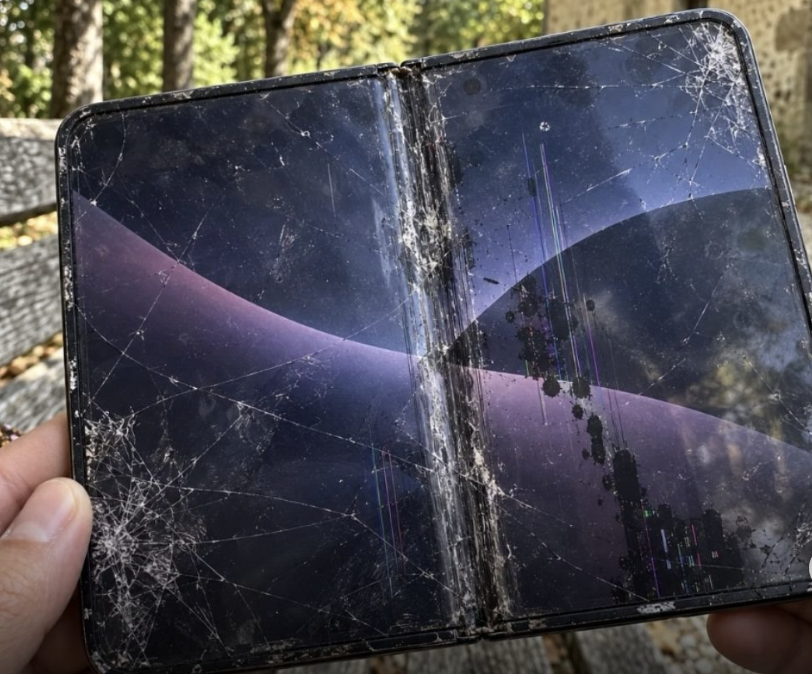
A photograph has been circulating widely on tech forums, Reddit communities, and social media platforms showing what appears to be a foldable iPhone with a cracked display. The image depicts a device that resembles Apple's design language — clean lines, rounded corners, and the distinctive Apple logo on the back — but with a folding form factor similar to Samsung's Galaxy Z Fold series. The screen in the image shows a dramatic crack running along the fold line, accompanied by a caption suggesting this was evidence that Apple's first foldable device was already having durability issues.
The image sparked extensive discussion in tech communities, with some users debating Apple's engineering choices and others questioning whether the image was authentic. The photo was used to support narratives both for and against foldable phone technology, and was shared by several tech influencers with large followings before its authenticity was seriously questioned.
This investigation examines whether the photograph is genuine and, if not, how it was created and why it was so convincing to so many people. For our analysis of a related fake Apple product image, see the iPhone Duo damage photo.
The Evidence
The Fundamental Problem — No Folding iPhone Exists:
The most straightforward piece of evidence against this image is the simple fact that, as of the time of this investigation, Apple has not released a foldable iPhone. While there have been persistent rumors and patent filings suggesting Apple is developing foldable technology, no such product has been announced, previewed, or leaked through Apple's supply chain in any credible way.
Apple's product development is among the most closely watched in the technology industry. Any genuine leak of a foldable iPhone prototype would generate immediate coverage from established Apple reporters like Mark Gurman (Bloomberg), Ming-Chi Kuo, and other analysts with proven track records. No such coverage accompanied this image, and no credible industry source has corroborated its authenticity.
Image Analysis:
Our technical analysis of the photograph reveals multiple indicators of AI generation:
- Text rendering: The on-screen interface in the image contains text that, when magnified, consists of plausible-looking but meaningless character sequences. This is a hallmark of AI-generated images, which struggle to produce coherent text. The status bar icons are similarly approximate rather than accurate reproductions of iOS interface elements.
- Material inconsistencies: The glass and metal textures on the device show subtle inconsistencies. The way light reflects off the alleged glass surface does not follow the Fresnel equations that govern real glass reflections, with the reflective intensity remaining constant across viewing angles rather than varying as it would with genuine glass.
- The crack pattern itself: While the crack in the image looks dramatic, its pattern does not match how foldable displays actually fail. Real foldable display failures, documented extensively from Samsung and other manufacturers, show characteristic patterns related to the flexible OLED layer delamination. The crack in this image more closely resembles traditional glass fracture patterns, suggesting the AI model generated the crack based on training data of conventional phone screen damage rather than foldable-specific failure modes.
- Shadow and reflection errors: The shadow cast by the device on the surface it rests on does not match the device's shape accurately, with the shadow suggesting a different three-dimensional form than the device as rendered.
Detection Tool Results:
We submitted the image to multiple AI detection platforms:
- Hive Moderation: 96% probability of AI generation
- Illuminarty: 92% probability of AI generation
- AI or Not: Classified as AI-generated with high confidence
All three tools independently flagged the image as AI-generated, with the consensus score being among the highest we have seen for product-related AI images.
Think you know something that's real or fake?
The community is waiting. Submit your question and let thousands of people vote on it.
Submit Your QuestionOur Verdict
FAKE. This image is AI-generated. No folding iPhone exists, and the photograph contains multiple technical artifacts consistent with current image generation technology. The image was likely created to generate engagement and discussion in tech communities, exploiting the widespread interest in Apple's potential entry into the foldable market.
The success of this image in generating discussion highlights how AI-generated product mockups can influence public perception and discourse about technology companies, even when the depicted products do not exist.
How to Spot This Type of Fake
When evaluating images of alleged unreleased products, apply these verification steps:
- Check credible sources first: Has any established journalist or analyst reported on this product? Genuine product leaks are quickly picked up by specialized media outlets with verified industry contacts.
- Examine on-screen text: AI-generated images almost always fail to produce coherent text. Zoom in on any text visible on screens, labels, or packaging. If it is gibberish, the image is likely AI-generated.
- Verify physical plausibility: Does the product as depicted make physical sense? Check reflections, shadows, material textures, and proportions against known real products from the same manufacturer.
- Consider the source: Who first shared this image? Was it a credible tech journalist, a known leaker with a verified track record, or an anonymous social media account? The source matters enormously.
- Look for the Apple logo: In AI-generated images of Apple products, the Apple logo often shows subtle imperfections, with slightly wrong proportions, incorrect placement, or rendering that does not quite match the precision of Apple's actual branding.
As AI image generation continues to improve, these artifacts will become subtler and harder to detect. For more examples of AI-generated tech product images and how to identify them, see our analysis of fake robot videos and our weekly compilation of AI fakes that fooled thousands.
Related Videos
Scroll to browse videos
What do you think?
Cast your vote and see what the community thinks
0 total votes
No account needed — vote anonymously
Got something to investigate?
Submit your own "Is X real or fake?" question and let the community vote.
Discussion
No comments yet
Be the first to share your thoughts.