Key Facts
- A viral video claims to show humanoid robots loading passenger luggage at Tokyo's Haneda Airport. We investigated and found that while Japan is testing airport automation, this specific video does not show real technology.
- Editorial verdict: Fake
- Estimated reading time: 5 minutes (945 words)
The Claim
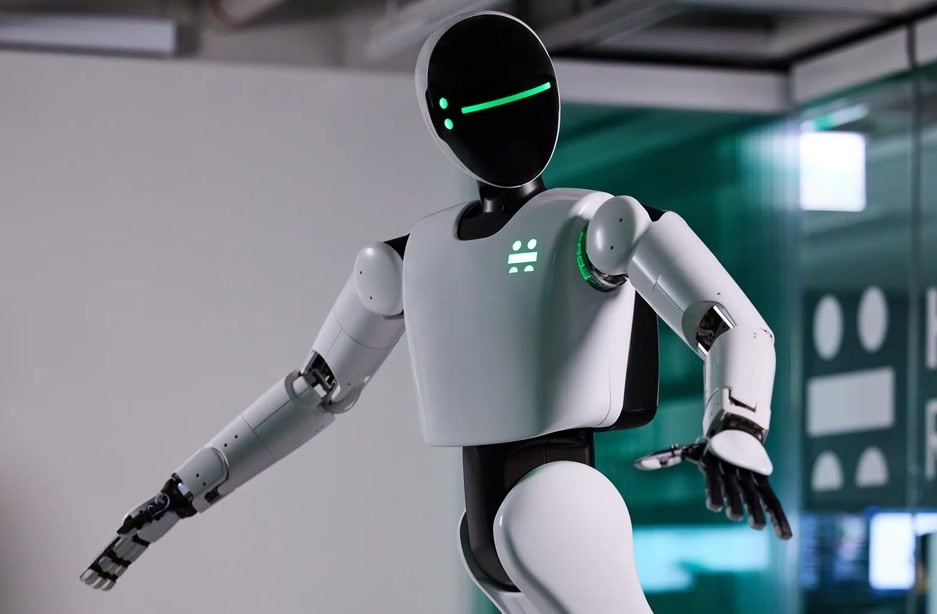
A video circulating on social media purports to show humanoid robots loading passenger luggage onto aircraft at Tokyo's Haneda Airport. The footage, approximately 30 seconds long, shows two sleek humanoid robots picking up suitcases from a conveyor belt, carrying them to an aircraft's cargo hold, and carefully stacking them inside. The video is captioned with claims that Japan has deployed these robots to address labor shortages in the aviation industry and that multiple Japanese airports are planning similar implementations.
The video generated enormous engagement, with millions of views and thousands of comments expressing amazement at Japan's technological advancement. Aviation industry commentators debated the implications for airport workers, while technology enthusiasts shared the video as evidence that the age of practical humanoid robots had arrived.
Building on our previous investigations of viral robot content, including the robot cat rescue and the Japan cooking robot, we investigated whether this video represents genuine airport automation or another instance of misleading synthetic content.
The Evidence
Airport Automation Reality:
Japan's airports have indeed been at the forefront of testing automation technologies, but the reality is significantly different from what the video depicts:
- Autonomous vehicles: Several Japanese airports use autonomous vehicles for transporting luggage between terminals, but these are wheeled ground vehicles, not humanoid robots.
- Automated baggage systems: Japanese airports employ sophisticated conveyor and sorting systems for baggage handling, but these are fixed infrastructure systems, not mobile humanoid robots.
- Robot assistants: Some Japanese airports have deployed robot assistants for wayfinding and information purposes, but these are specialized service robots, not general-purpose humanoid workers.
No Japanese airport, including Haneda, has announced or deployed humanoid robots for luggage loading operations. Japan Airlines (JAL) and All Nippon Airways (ANA) have both invested in automation technology, but their published plans focus on autonomous ground vehicles and improved conveyor systems rather than humanoid robots.
Technical Feasibility Analysis:
The task shown in the video, loading luggage into an aircraft cargo hold, requires capabilities that significantly exceed current humanoid robot technology:
- Payload capacity: Passenger luggage can weigh up to 23 kg (50 lbs) or more per bag. The robots in the video appear to handle these weights effortlessly while maintaining balance and precise placement. Current humanoid robots that can walk reliably have limited payload capacities, typically under 10 kg for sustained manipulation tasks.
- Confined space operation: Aircraft cargo holds are cramped, irregularly shaped spaces with low ceilings. Operating a humanoid robot in such a confined environment presents enormous challenges for spatial awareness, path planning, and collision avoidance that have not been solved for real-world deployment.
- Speed and efficiency: The robots in the video work at speeds comparable to or exceeding human baggage handlers. Real humanoid robots operate significantly slower than humans for comparable tasks, making them economically unviable for time-sensitive airport operations.
- Environmental challenges: Airport tarmacs present numerous challenges including weather conditions, jet blast, noise, and the presence of other vehicles and personnel. No humanoid robot has been demonstrated to operate reliably in such conditions.
Video Analysis:
Our technical examination of the video confirmed it as synthetic content:
- The robots' movements exhibit the characteristic smoothness of CGI animation rather than the mechanical quality of real robotic motion.
- The interaction between the robots' hands and the luggage lacks the physical realism of genuine object manipulation, with bags appearing to slightly float or snap into position rather than being grasped with realistic physics.
- The lighting on the robots does not consistently match the outdoor airport environment, with the robots appearing slightly overexposed relative to their surroundings.
- The aircraft in the background, while realistic, shows subtle rendering artifacts in its surface reflections that suggest it was either CGI or a still photograph composited into the scene.
- No identifying markings for any real airline, airport, or robotics company are visible in the video, which is unusual for a genuine technology deployment that would typically be accompanied by corporate branding and publicity.
Think you know something that's real or fake?
The community is waiting. Submit your question and let thousands of people vote on it.
Submit Your QuestionOur Verdict
FAKE. This video does not show real humanoid robots operating at Tokyo's Haneda Airport or any other airport. The video is synthetic content, likely CGI, that significantly misrepresents the current state of both humanoid robotics and airport automation technology. While Japan is genuinely investing in airport automation, the specific implementation shown in this video does not exist and is not currently feasible with available technology.
How to Spot This Type of Fake
When evaluating videos claiming to show robots deployed in real-world settings, consider these factors:
- Check official announcements: Major technology deployments at airports or other public facilities are accompanied by official announcements from the deploying organization. If you cannot find a press release or official statement, the deployment likely did not happen.
- Assess the capability gap: Compare what the video shows to the best publicly demonstrated robotic capabilities. If the gap is enormous, the video is likely synthetic. Follow leading robotics companies' official channels to understand what is currently possible.
- Look for branding: Real technology deployments in public settings typically feature corporate branding. The absence of any identifiable company logo or name on robots supposedly deployed at a major international airport is a significant red flag.
- Watch object interactions: The way robots interact with physical objects is one of the hardest things to simulate accurately. Watch for objects that appear to float, snap into position, or pass through the robot's hands.
- Consider the economics: Would it make economic sense to deploy expensive humanoid robots for a task that humans perform efficiently? Understanding the economic context of claimed deployments can help identify implausible claims.
Stay informed about what robots can and cannot do by following our coverage of viral robot claims, including the broader challenge of distinguishing real from fake in the age of AI.
Related Videos
Scroll to browse videos
What do you think?
Cast your vote and see what the community thinks
0 total votes
No account needed — vote anonymously
Got something to investigate?
Submit your own "Is X real or fake?" question and let the community vote.
Discussion
No comments yet
Be the first to share your thoughts.